
Why You Feel Stuck in Your Career—And how to move forward
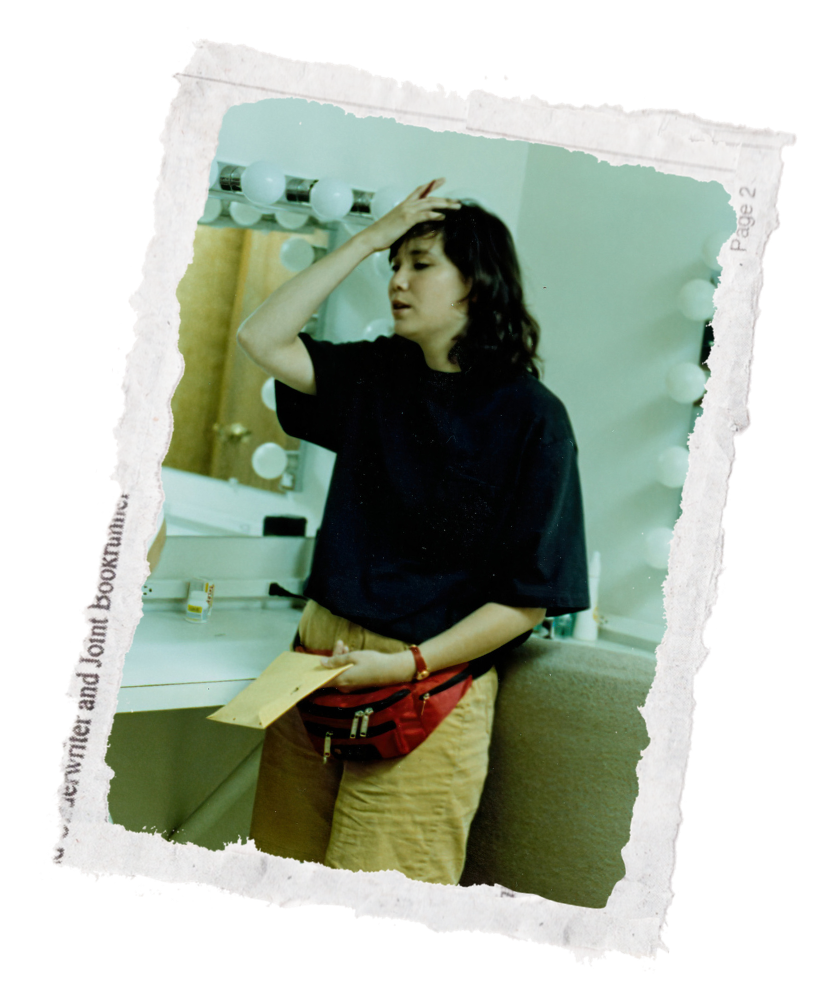
It was a dizzying experience to be promoted every 18-24 months. To be part of the team that took CBS from last place to first. To be the head of a department that developed television pilots that were the highest testing in network history. To be a champion for emerging voices and see how my advocacy positively impacted people’s lives.
Then I got fired.
For someone who took great pride in being competent and capable, I didn’t know the first thing about how to handle such a significant career setback. My MBA certainly didn’t have a concentration in “What the f*ck just happened?”
I couldn’t sleep. And then all I did was sleep. I couldn’t eat. And then all I did was eat crappy food. I couldn't focus. I couldn’t put thoughts together. My heart was saturated with shame, humiliation, and confusion. I was Alice in a wonderland, dropped into a world that made no sense.
Trying to figure out what came next was like flooring the gas in a semi truck with a block wedged under the wheel. No matter how hard I pushed the gas pedal, the vehicle wasn’t moving. Despite significant investments in therapy, coaching, workshops, books, and journeys with shamans.
And that's the part I've spent years thinking about, studying and eventually working through with hundreds of clients.
If you've lost a job, been laid off, watched a career dream fall apart, burned out in work you used to love, or simply reached a point where you don't know what you want anymore, you may think you need a better career strategy.
And you might. I love a plan more than anyone. I’m the goddess of planning.
But something else may be happening too.
You may be grieving.
Why Do I Feel So Lost After a Career Change?
When something significant changes at work, we're usually encouraged to focus on the practical problem. Update the résumé. Activate your network. Take a class. Pivot!
Those things can absolutely help. But they don't necessarily address what you've lost. That's the distinction I wish I'd understood when I was fired.
Today I call what I experienced career grief: when something changes in your professional life that you really, really, really didn’t want to have changed.
And you don't have to lose your job to experience career grief. It can show up as a promotion you worked toward for years that didn't happen. A business failure. A project you loved died on the vine. Your industry changed around you. You started to loathe work you once loved. You retired. You finally reached the career goal you'd been chasing and discovered you didn't want it anymore. Or you chose to leave something that no longer fit and were surprised by how much you missed it.
If you've tried everything and still feel stuck, an unacknowledged loss may be part of what's keeping you there.

What Do You Really Lose When You Lose a Job?
When we talk about job loss, we tend to focus on the obvious things. Like the paycheck, the benefits, and the title. Those losses are real. Sometimes terrifyingly real.
But there’s another part of the story you may be missing.
In research I've conducted with people who’ve experienced significant professional change, they talked about losing identity, community, confidence, trust, direction, status and belonging.
One person told me: "I didn't know what to dream for anymore."
Grief comes from the loss of what we were attached to — and we form attachments not only to people, but to places, objects, beliefs, even versions of ourselves. When one of those attachments is disrupted, knowing intellectually that "it's just a job" doesn't make the loss disappear.
What Are the Signs You're Struggling With a Career Loss?
Career grief and grief look very similar and affect us not just emotionally, but also physically, cognitively and spiritually. Here are some of the more common signs of grief:
- Appetite disturbances
- Sleep disruption
- Feeling exhausted even when you're not doing much
- Avoiding people
- Overworking
- Obsessively replaying what happened
- Having trouble making decisions
- Muddled priorities
- Risk aversion
- Losing interest in things you usually enjoy
- Lack of confidence in abilities you used to trust
- Applying for jobs you don't actually want because you feel like you should be doing something
- A feeling of being unmoored, afloat and without a rudder or roots
While I checked off all these boxes, some people check off just a few. That’s the thing with grief. It manifests differently for everyone so just because someone isn’t crying, it doesn’t mean they're not grieving. I was extremely high-functioning. Even my closest friends were surprised when I would confess how despondent I was years after being fired.
We often chalk up grief symptoms to being stressed, anxious, burned out or depressed. And while there’s quite a bit of overlap, you may want to ask yourself, “What have I lost?” That can help you determine if grief is part of the mix.
Is It Career Burnout, a Slump or Something More?
Not every crappy day at work is grief.
Sometimes you're bored. Sometimes you're exhausted. Sometimes your boss is an asshole. Sometimes you need a vacation. Sometimes you're in a temporary career slump and things genuinely can improve with a new project, a different manager, clearer boundaries or time off.
But if something meaningful has ended or fundamentally changed — like your role, identity, sense of belonging, confidence, self-trust, and even your dream for the future — there may be a loss underneath the dissatisfaction.
And sometimes burnout, disappointment and grief are tangled up together.
You don't need to diagnose yourself. Simply answer the question:
What have I lost?
Because the answer might explain why making a new career plan hasn't been enough.
Why a Career Setback Can Destroy Your Confidence
There's another layer when something happens to us professionally that mucks up the ability to bounce back. We decide what it means about us.
- I was fired becomes: I’m a failure.
- The promotion went to somebody else becomes: I'm not leadership material.
- My project didn't sell becomes: I can't trust my instincts.
- I haven't found another job becomes: I'm too old.
- My position was eliminated becomes: I’m not valuable enough to keep.
One person in my research used a word that really got me. "Tainted."
That's a hell of a thing to carry into your next job interview. Or your next pitch. Or your next business. Or even into your morning coffee when you're trying to figure out what the hell comes next.
This kind of self-talk can make a painful experience even harder because somewhere along the way, what happened to us becomes who we think we are. Those stories can feel like facts, especially when we’ve repeated them enough times. And if we don’t stop to examine them, they can start making our career decisions for us.
We apply for jobs beneath our experience because we’ve lost confidence. We don’t pitch the project because we don’t trust our intuition anymore. We stay somewhere we’ve outgrown because at least it feels safe.
So part of making sense of a career setback is asking: What happened? And what have I decided it means about me?
And perhaps most importantly: what’s the data to actually support the story I’ve created about what happened?

How Do You Move Forward When You Feel Stuck in Your Career?
Eventually, I realized I needed a way to work with the grief and figure out what came next. But I knew nothing about how to mourn a loss that wasn’t about the loss of life. Can you have a funeral for a lost job? Can I plant a tree for the project that no one responded to?
Turns out, yes we can. And that's what became my RISE Framework.
RISE has four tasks:
R — Recognize the Loss
I — Investigate the Meaning
S — Signal the Shift
E — Embark on What's Next
You’ve already met the first two.
When I asked you to look beyond the paycheck and title and consider whether you also lost confidence, community, identity, belonging or a dream, you were Recognizing the Loss.
When I invited you to look at the data to separate what happened from what you decided it meant about you — I got fired from I’m a failure — you were Investigating the Meaning.
The third task is Signal the Shift.
This is the part that can feel a little strange when we’re talking about work because our culture doesn't give us many rituals for professional endings. We have retirement parties. Maybe a goodbye lunch if everyone likes you.
But what do you do when a business you spent ten years building fails? When the project you loved doesn't get made? When you're laid off from a company that was a huge part of your identity? When you realize the career you worked your whole life to build is over?
Those endings deserve to be marked too.
I encourage career grievers to create a bespoke ritual — something personal that acknowledges what has ended and what it meant to you. It signals that a shift is occurring, taking the loss out of the shadows and into the light.
It had never occurred to me that I could create a rite of passage for something work related. I thought rituals were specific to religion or wacky people in robes. But rituals are a powerful set of intentional actions that give stability, emotional grounding, and stress relief during times of uncertainty and grief. Getting out of our heads and creating a physical manifestation of what was lost along with an acknowledgement of who we are becoming is the most powerful tool I’ve experienced when navigating career grief.
Your ritual might involve a symbol of what you're grieving — a business card, a script, a company ID, a photograph, a rejection letter, something you created. You might write a eulogy, bury a name tag, burn a headshot, transform a business suit or ask someone you trust to witness you saying goodbye.
I've worked with people who’ve created rituals that were private and quiet and others that involved friends and family. There isn't a correct ritual because there isn't a correct way to grieve.
The point is to create a moment that says: This happened. This mattered. And something has changed.
I call it making a good goodbye. You get to take ownership of how you respond to what happened and how it shapes who you are becoming.
How Do You Know What to Do Next in Your Career?
The final task in RISE is Embark on What’s Next. And this is where career strategy comes back into the picture. Because acknowledging your grief doesn't mean you sit around forever waiting to feel perfectly ready before making another move.
It means you're making that move with a better understanding of what’s important to you now.
The truth is you can't go through a significant career loss without being changed in some way.
Maybe what mattered enormously to you ten years ago doesn't matter as much anymore. Maybe security matters more. Or freedom. Creativity. Family. Leadership. Community. Peace.
Maybe the experience clarified something you never want to tolerate again.
Before asking What job should I get? or What should I do with the rest of my career?, I like to start somewhere more fundamental:
What matters most to me now?
Which is why Embarking on What’s Next typically starts by re-examining your values. Your values are your North Star. They don't tell you exactly which job to take or whether to start the business or accept the promotion. But they give you something to navigate by.
That's why I created What Matters Now, a workbook to help you identify the values that matter most to you in this moment — not the person you were five or ten years ago, and not the person everyone else thinks you should be.
Once you know your North Star, career strategy becomes less about finding the one perfect answer and more about making choices that point you in the right direction and feel aligned. One values driven step at a time.
If there’s one thing I hope you’ll take away from this post, it’s that what you lost isn’t the end of what’s possible for you.
Buy the What Matters Now Workbook
Laverne McKinnon is a grief coach, career strategist, and speaker. Subscribe to This Is Grief Too for practical guidance on professional loss, career grief, and what's next.
© Laverne McKinnon 2026 • Branding & Design by Good Brand Partners
